Seminar
Developing mineral resource boundaries for application in absolute environmental sustainability assessment
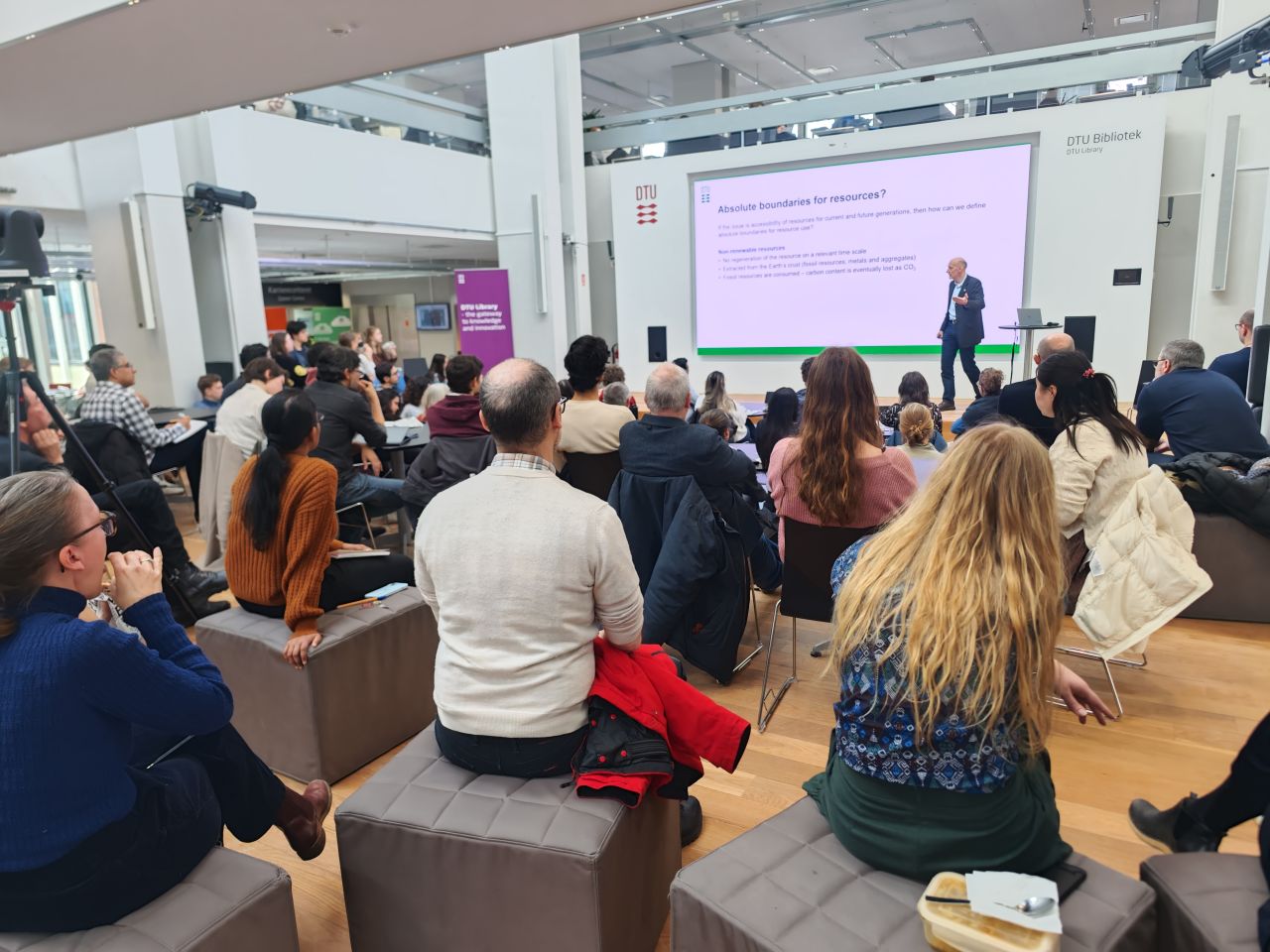
Absolute boundaries for resources! If the issue is the accessibility of resources for current and future generations to live a sufficient lifestyle, how can we define absolute boundaries for resource use?
The Climate Paris Agreement sets a boundary and a limit: the 1.5 °C ceiling. We should aim to stay below that, which is an absolute target. During the last lunch seminar at the Centre for Absolute Sustainability, we looked into the current research and work on setting such targets and boundaries for Mineral Resources.
A key insight: The problem is not to extract the resources but not to lose them. The problem for non-renewable resources is dissipation, not extraction.
Examples: Copper sulfate pesticide and sacrificial anodes fitted on a shop—here the copper is lost!
Four different principles were presented for developing a new boundary for mineral resources: the resource issue, a science-based approach, a control variable, and resource damage.
One of them, "the resource issue", was set on a formula with the three key elements of:
- Crustal stock (accessible vs. inaccessible)
- Stock in use
- Technosphere stock (accessible vs. dissipated)
“…We should focus on the needs-fulfillment when setting the boundaries for resources…” Mikołaj Owsianiak
New boundaries should consider actual needs, rather than arbitrary reductions based on current use.
This seminar features:
- Michael Hauschild, Professor and Centre-leadCentre for Absolute Sustainability
- Mikołaj Owsianiak, Senior Researcher at DTU Sustain