Seminar
From Planetary Boundaries to Planetary Policies?
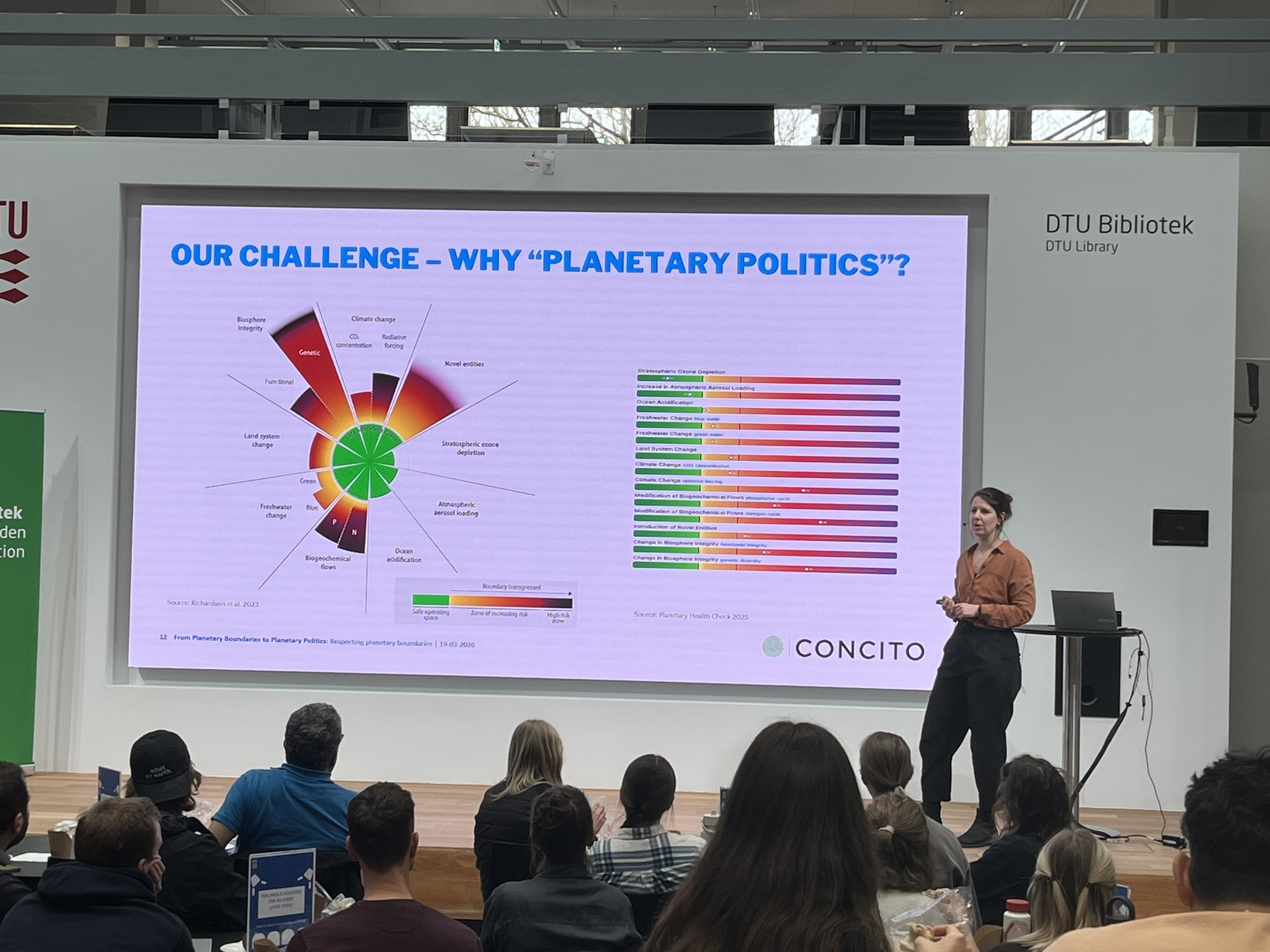
At the DTU Centre for Absolute Sustainability, one of our key activities is to develop quantitative methods that derive decisions that respect planetary boundaries. How can this look like in a political context, given the current state of knowledge and methodological maturity, and what methodological and systemic developments are needed for policymakers to be able and willing to use absolute boundaries more concretely, for setting specific targets? This month’s CfAS lunch seminar explores these questions through short expert presentations and a panel debate with you, the onsite and online audience.
This seminar features:
- Cecilie Friis: senior advisor and lead for planetary boundaries at CONCITO, Denmark’s green think tank, working at the intersection of science, policy and societal transitions. Cecilie specialises in translating climate and sustainability knowledge into actionable insights for policymakers and industry, helping stakeholders navigate complex regulatory landscapes and align decisions with longterm planetary limits.
- Eldbjørg Blikra Vea: Postdoc at DTU Sustain and Centre for Absolute Sustainability. Her research focuses on methods for absolute environmental sustainability assessment that evaluate whether products and systems operate within planetary boundaries. She works on determining and modelling environmental impacts and boundaries, with particular emphasis on environmental issues where impact severity, and the associated boundaries, depend on regional characteristics.
- Christian Poll: special consultant at the Centre for Absolute Sustainability and advisor to the Danish Consumer Ombudsman on greenwashing cases. His work applies life cycle assessment and planetary boundaries as the scientific basis for enforcing the marketing act in relation to green claims